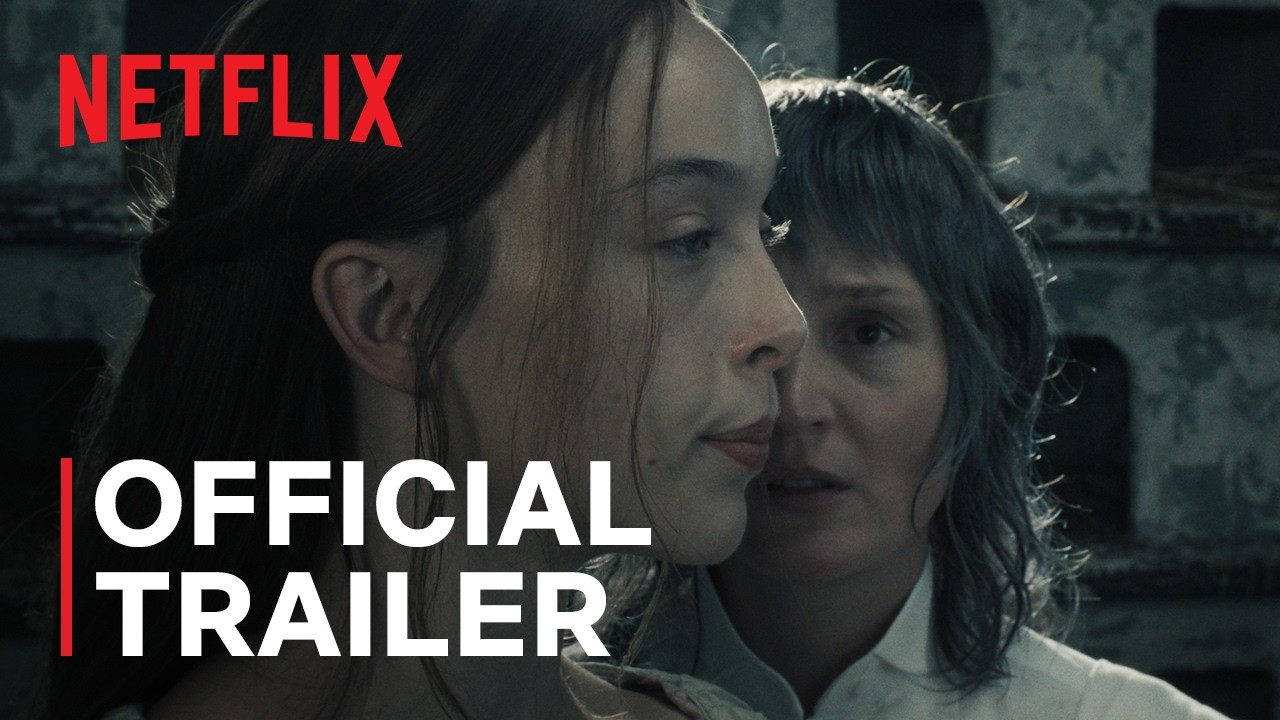
Monster: The Lizzie Borden Story arrives on Netflix on September 17. Ten days from now. The trailer has already been called "eroto-blood violence porn" by Awards Daily. The Boston Globe published a piece describing the show's central premise as "utterly bizarre." A wave of discourse about whether Ryan Murphy is doing something interesting or something irresponsible has begun, right on schedule, exactly as it has before every season of this franchise.
I want to talk about why none of that discourse is going to matter the way it has mattered before, because I think the reason is specific and worth naming directly. Murphy did not stumble into a safer subject. He chose one.
What the show is and what it is doing
Monster: The Lizzie Borden Story dramatizes the 1892 Fall River, Massachusetts murders in which Lizzie Borden was accused of killing her father Andrew Borden and stepmother Abby Borden with an axe. She was acquitted. She spent the rest of her life in Fall River and died in 1927.
Ella Beatty plays Lizzie. Charlie Hunnam plays Andrew Borden, the father and murder victim. Rebecca Hall plays Abby Borden. Sarah Paulson, who has appeared in every season of this franchise, plays Aileen Wuornos in what appears to be a parallel storyline that connects Lizzie Borden to a later case. The cast is strong enough that you could watch the show purely as performance and find things to appreciate.
The creative team is Murphy and Ian Brennan, who have written together since Glee and collaborated across Scream Queens, The Politician, and every season of the Monster franchise. This is not a departure from the established formula. It is the formula with one variable deliberately changed.
The show appears to frame Lizzie's relationship with her maid Bridget Sullivan as romantic and sexual. Based on the trailers and pre-premiere coverage, it constructs a narrative around this relationship that includes invented psychological motivations not supported by historical record. Awards Daily said in August: "This version is like every other version of Monster: lots of sex, lots of violence, but no real truths told." The Boston Globe's piece was headlined "Netflix's Monster: The Lizzie Borden Story sounds utterly bizarre."
I do not fully disagree with either of those readings of the trailer. What I think they miss is why Murphy chose this particular case to build a season around, and why the controversy about the show is going to play out differently from every previous controversy this franchise has generated.
What the franchise has actually been doing
The Monster anthology began with Dahmer in 2022. That season logged 196 million hours viewed in its first five days on Netflix, briefly making it the second-most-watched English-language Netflix series of all time, behind only Stranger Things 4. It was also the subject of the most sustained ethical backlash the franchise has faced: family members of Jeffrey Dahmer's victims went public with their objections, described being re-traumatized by the show, and at least one family said they had not been contacted by Netflix before it aired. Evan Peters won the Golden Globe. The conversation about whether the show should exist ran for months.
The Menendez Brothers season followed in 2024. Erik Menendez's wife Tammi posted a statement on X describing the show's portrayal as a "disheartening slander" and objecting to specific scenes. Murphy's response, in an interview with The Hollywood Reporter: "The Menendez brothers should be sending me flowers. They haven't had so much attention in 30 years." That quote became its own small controversy.
The Ed Gein season aired in October 2025 and was, by critical consensus, the weakest of the three -- "pulpy and sloppy," "a product of sensationalism, rage bait, and misinformation." It still charted. It still generated discourse. Murphy moved on.
The pattern, by this point, is clear. Murphy makes a show about a real killer. Critics object to the ethics. Victims or their families object to the portrayal. Murphy's team says this is important storytelling. The controversy generates more attention. The show does numbers.
Lizzie Borden is the version of that formula with one key variable changed: there is no one left to object.
The dead victim problem, and why Murphy chose this case
Lizzie Borden was born in 1860 and died in 1927. Her sister Emma, who was fifteen miles away in Fairhaven on the day of the murders and was never considered a suspect, died the same year -- nine days after Lizzie. Lizzie had no children. Emma had no children. The victims, Andrew and Abby Borden, have no living descendants with a public presence or legal standing to protest a dramatization of their deaths.
This is not a coincidence.
When Erik Menendez's family called Monster slanderous, their statement had weight because Erik is alive, he is a named party in the show, and the word "slanderous" carries real legal meaning when the subject can still be harmed by misrepresentation. When the families of Dahmer's victims spoke out, their pain was current and visible and impossible to dismiss as sensitivity about long-dead strangers. With Lizzie Borden, the people most directly affected by the portrayal are not around to be affected. Murphy can invent a romantic conspiracy involving a nineteenth-century woman and her maid, and the worst he will face is a negative review in the Boston Globe.
He appears to have weighed that tradeoff and found it acceptable. I am not sure I disagree with the logic, even as I find some of the execution -- based on what I have seen of the trailers -- questionable.
What I can say is that the choice of Lizzie Borden is the most calculated decision this franchise has made. It preserves everything the formula delivers: the lurid subject matter, the prestige production values, the psychological invention, the cast that makes you want to watch even when the material makes you uncomfortable. It removes the element that made the previous seasons genuinely troubling to a significant portion of the audience, which was the proximity of living people who had been harmed by the real events.
What I expect from September 17
I have not seen the show. I have watched the official trailer twice and read everything published about it since August. Based on that, I expect the following things to be true.
The performances will be good. Ella Beatty, who has been building a resume across film and television for the past few years, is doing something interesting with Lizzie in the trailer -- the controlled surfaces, the interior life that does not quite match the face she presents to the room. Sarah Paulson is Sarah Paulson, which means she will be very good at the kind of theatrical intensity Murphy's shows require, whatever the Aileen Wuornos parallel story ends up being. Rebecca Hall is Rebecca Hall, which means she will elevate whatever material she is given.
The historical invention will be extensive. The sexual-conspiracy framing of Lizzie's relationship with Bridget Sullivan draws on decades of speculation and dramatization -- the 2018 film Lizzie covered similar ground -- but the Monster treatment appears to push it further into territory that has no historical support. That is consistent with every previous season.
The critical reception will be mixed to negative. The pre-premiere coverage has already established the tone. Awards Daily and the Boston Globe are not outliers; they are signals.
The show will chart. It will probably do well in the first weekend. I will watch it, and I will tell you what I think of it after I do.
Why the formula keeps working
I have watched enough Ryan Murphy to know that the critical conversation around Monster and the commercial performance of Monster are operating in almost completely separate channels. The people writing negative reviews are not the people driving the viewership. The people watching are not primarily motivated by whether the show gets history right. They are motivated by the promise of something lurid and well-produced and slightly transgressive, and Monster delivers all three things reliably.
What the Lizzie Borden season has figured out is how to deliver the core Monster experience without the ethical complications that made Dahmer and the Menendez season feel genuinely troubling to a significant portion of the audience. The exploitation is there, in the trailers, in the premise, in the casting. The living people who would be hurt by the distortion are not.
I am not sure that makes the show more defensible. I think it might make it more cynical. The choice of a historical subject with no surviving interested parties is not the same as choosing a subject that is ethically unambiguous. It is choosing a subject where the ethical ambiguity has no one left to articulate it.
Murphy has found the version of this formula that avoids the lawsuit and the protest and the family statement. That is not the same as finding the version that does not deserve them. What it is, is smart. And smart is what this franchise has always been, whatever else you want to say about it.
FAQ
What is Monster: The Lizzie Borden Story about? The season dramatizes the 1892 Fall River, Massachusetts murders in which Lizzie Borden was accused of killing her father and stepmother with an axe. She was acquitted. The show appears to frame her relationship with her maid Bridget Sullivan as romantic and sexual, drawing on decades of speculation that has no firm historical support.
When does Monster: The Lizzie Borden Story premiere? September 17, 2026. All eight episodes will be available on Netflix on the same day.
Is Lizzie Borden still alive? No. Lizzie Borden was born in 1860 and died in 1927. She never married and had no children.
What happened at the Lizzie Borden trial? Lizzie was tried in June 1893 after a 15-day trial and was acquitted by a jury that deliberated for approximately 90 minutes. She used her inheritance to purchase a larger home in Fall River, which she named Maplecroft, and lived there until her death.
Who plays Lizzie Borden in the Netflix show? Ella Beatty plays Lizzie Borden. Charlie Hunnam plays Andrew Borden (Lizzie's father, the murder victim). Rebecca Hall plays Abby Borden (stepmother). Sarah Paulson appears in a parallel storyline as Aileen Wuornos.
Did Ryan Murphy face backlash from previous Monster seasons? Yes. The Dahmer season drew sustained objections from the families of Dahmer's victims. The Menendez Brothers season drew a statement from Erik Menendez's family calling the portrayal a "disheartening slander." The Lizzie Borden season has generated critical controversy from trailers alone, but has no living parties in a position to formally object.
Who are the creators of Monster: The Lizzie Borden Story? The show is created by Ryan Murphy and Ian Brennan, who have collaborated across Glee, Scream Queens, The Politician, and every previous season of the Monster anthology.
Monster: The Lizzie Borden Story premieres September 17, 2026 on Netflix. Tracking streaming premieres at incoming.to.