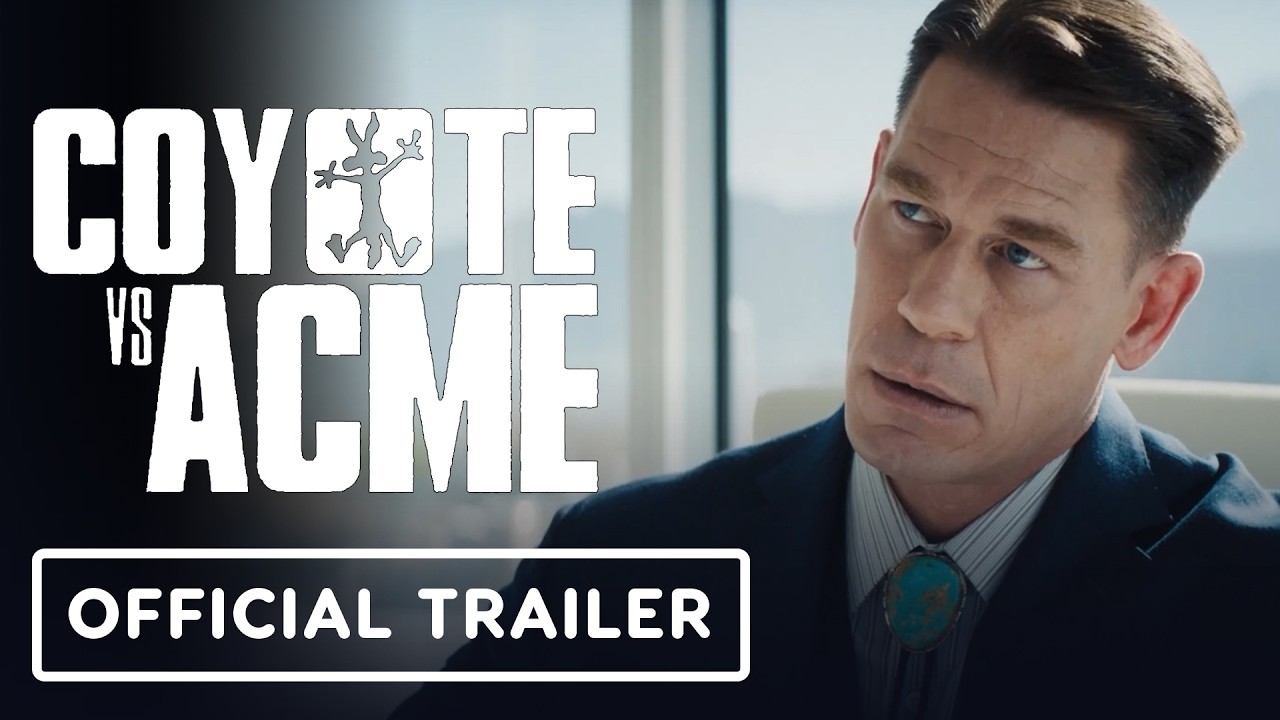
In November 2023, Warner Bros. Discovery announced that it was shelving Coyote vs. Acme. The film was finished. The cast had been paid. A trailer existed. And WB decided the most economically rational thing to do with it was to never let anyone see it, take a $30 million tax write-off on a $70 million investment, and move on. I remember reading the headline and thinking: this is the moment the post-merger era officially broke something it cannot put back together.
Three years later, I watched the film. It has a 95% on Rotten Tomatoes. It opened to $15.5 million domestically. Critics have called it one of the best comedies of 2026. It is the highest-rated Looney Tunes film in history. I have been trying to figure out how to write about it ever since, because the story of this film existing at all is more interesting than most of the films that have come out this year.
What Actually Happened in 2023
To understand why Coyote vs. Acme landing this well matters, you have to understand what the WB-Discovery merger did to Hollywood between 2022 and 2024.
When David Zaslav took over as CEO of the merged company in April 2022, he implemented a cost-cutting strategy that became notorious very quickly. The most visible symptom was the decision to shelve finished films rather than release them, treating them as tax write-offs rather than content. In August 2022, Batgirl was shelved alongside the completed Scoob! Holiday Haunt. By the time Coyote vs. Acme was announced in November 2023, the pattern had become clear enough that people recognized it immediately.
What made Coyote vs. Acme different from the earlier write-offs was the visibility. Batgirl had wrapped principal photography and was in post-production when it was shelved, and because no footage had been publicly released, the loss felt abstract to most people. Coyote vs. Acme had a trailer. People had seen Will Forte in it. They had seen Wile E. Coyote in live-action settings. The film felt real, and that made its cancellation feel like something was being taken away rather than something that had never existed. Over 20,000 people signed a petition demanding WB release it.
WB put the film up for sale instead of simply destroying it. In 2025, Ketchup Entertainment bought the worldwide distribution rights for approximately $50 million, significantly more than the write-off WB had taken. Someone had paid more to release the film than WB had decided it was worth sitting in a vault.
What the Film Actually Is
Director Dave Green made a live-action and animated hybrid built around a straightforward premise: Wile E. Coyote files a lawsuit against the Acme Corporation for manufacturing defective products. Every gadget and weapon Acme sold him over the years blew up in his face. He wants accountability.
Will Forte plays Kevin Avery, the lawyer who takes on the case. John Cena plays Buddy Crane, Acme's representative and the film's primary antagonist. Lana Condor rounds out the main cast. The film is based on Ian Frazier's 1990 New Yorker piece, "Coyote v. Acme," which is genuinely funny writing that holds up, and the screenplay extends the original conceit into something more elaborate without losing what made the premise work.
I went in expecting something serviceable, a film that survived its cancellation story more than its content. That is not what I got.
What Surprised Me
The first thing I noticed is how well the film commits to its own logic. Looney Tunes adaptations have historically struggled with the question of tone, going either too sincere or too ironic and landing somewhere that satisfies neither the audience who grew up with the cartoons nor anyone else. Coyote vs. Acme finds a third register. The cartoon violence is cartoon violence, presented without apology and without the film winking at the audience about how absurd it is. The legal drama is played straight. The comedy comes from the collision of those two things, which is the correct instinct for this material.
Will Forte is very good here. He is a performer who works best when given something that rewards commitment, and Kevin Avery is exactly that kind of role: a lawyer who genuinely believes in the case and has to hold that belief together against everything the film throws at him. John Cena's Buddy Crane is a more interesting antagonist than I expected, less a cartoon villain than a recognizable corporate type who has learned to perform sincerity so consistently he has almost convinced himself.
The film is also funny in ways that caught me off guard. Not in the nostalgic-property-gag mode that tends to substitute for actual comedy in this genre, but in ways that require the film to have earned the laugh first. There are sequences in the courtroom that work as actual comedy scenes, not as references to things I already liked.
The 95% and What It Means
The film currently sits at 95% on Rotten Tomatoes with 189 reviews, a 94% audience score with over 500 ratings, and the record for the highest-rated Looney Tunes film ever made. The previous record holder was The Day the Earth Blew Up from 2024, which got 86%. That is not a small margin.
I want to be honest about something: some portion of the enthusiasm around this film is the goodwill generated by the story of its survival. Critics and audiences who followed the 2023 controversy arrived wanting this film to be good, and wanting it to beat WB became part of how people engaged with it. I do not think that invalidates the scores. But I think it is worth acknowledging that Coyote vs. Acme is not being evaluated in a vacuum. It is being evaluated as the film that made it out.
That said, I do not think audience affection for the backstory explains a 95% critics score from 189 reviews. Critics who get paid to be skeptical are not uniformly rewarding a film for surviving corporate decisions. The film earned those reviews.
What the $15.5 Million Opening Actually Tells Us
The $15.5 million opening weekend is a box office hit by the standards of what this film is. It is not a blockbuster number. It is the number a mid-budget live-action animated hybrid should make when it is well-reviewed and has an audience that has been waiting three years to see it. Ketchup Entertainment paid $50 million for distribution rights. Whether that investment is fully recovered will depend on the film's legs and ancillary revenue. But the opening weekend proved there was a real audience for this film, which is what WB's accounting never believed.
I track a different number. On incoming.to, which aggregates Wikipedia traffic, YouTube trailer plays, and search trends into a real-time demand score, Coyote vs. Acme is currently the second-highest-ranked movie on the entire site, behind only Spider-Man: Brand New Day. Its score has surged more than 20 points in the past 24 hours, which is the kind of movement that happens when a film stops being a topic of conversation and starts being something people are actively watching and talking about at the same time. The opening weekend told us the film had an audience on day one. The demand score tells me the conversation is still growing, not settling.
This is the part of the story I find most interesting. The entire 2022-2024 WB era was premised on a specific theory of value: that certain films were worth more as tax write-offs than as released content, because the released content would not find an audience. Coyote vs. Acme disproves that theory in the clearest possible way. It found an audience. The film that was deemed unworthy of release is outperforming most of what WB did release during that same period.
Why I Think This Film Matters
I do not want to overstate what Coyote vs. Acme represents for Hollywood economics. One film recovering from a write-off decision does not change the incentive structures that produced the write-off in the first place. Studios will still model content against tax benefits. Mergers will still produce cost-cutting eras. Mid-budget films will still struggle for distribution.
But what this film does is make the logic of the 2023 era legible in retrospect. Batgirl was shelved before anyone could measure the audience for it. Coyote vs. Acme was shelved, sold, released, and reviewed. We now have actual data on what that audience was. It was real, and it showed up, and the film they showed up for turned out to be one of the better studio comedies in recent memory.
I watched a movie that Warner Bros. decided in 2023 should not exist. I liked it more than I expected to. And I keep thinking about the version of this story where Ketchup Entertainment did not step in, where the petition got 20,000 signatures and went nowhere, where the film stayed in a vault and the only evidence of its existence was a trailer and a tax document. I am glad that version of the story is not the one we got.
Coyote vs. Acme is in theaters now. Tracking release dates and streaming availability at incoming.to.