On March 20, 2026, BTS released ARIRANG — their first full-group studio album in nearly four years. The commercial impact was immediate and historic:
- 641,000 equivalent album units in its opening week, debuting at No. 1 on the Billboard 200 — the largest debut week of 2026
- 13 tracks charted simultaneously on the Billboard Hot 100, led by "Swim" at No. 1
- 18.4 million global viewers watched BTS THE COMEBACK LIVE | ARIRANG on Netflix — the first time all seven members stood on the same stage in nearly three years — broadcast to 190 countries, No. 1 in 77 of 92 territories on premiere day
By August 6, 2026, ARIRANG had reached 4 billion streams on Spotify. It took 137 days. That is the fastest any group in Spotify history has reached that milestone. The fastest by any Asian act, ever. The fifth-fastest album of any kind on the platform — behind only a small number of releases from a short list of generational artists.
None of this is a story about K-pop. It is a story about what happens to demand when supply is forcibly removed for three years.
The Three-Year Equation
BTS did not go on hiatus. The South Korean government drafted them.
Jin enlisted in December 2022. J-Hope followed in April 2023. Suga in September 2023. RM, V, Jimin, and Jungkook enlisted simultaneously in December 2023. The last member — Suga — was officially discharged June 21, 2025. From Jin's enlistment to ARIRANG's release is approximately 39 months. For most of that period, the most-streamed group on the planet was contractually and legally unavailable.
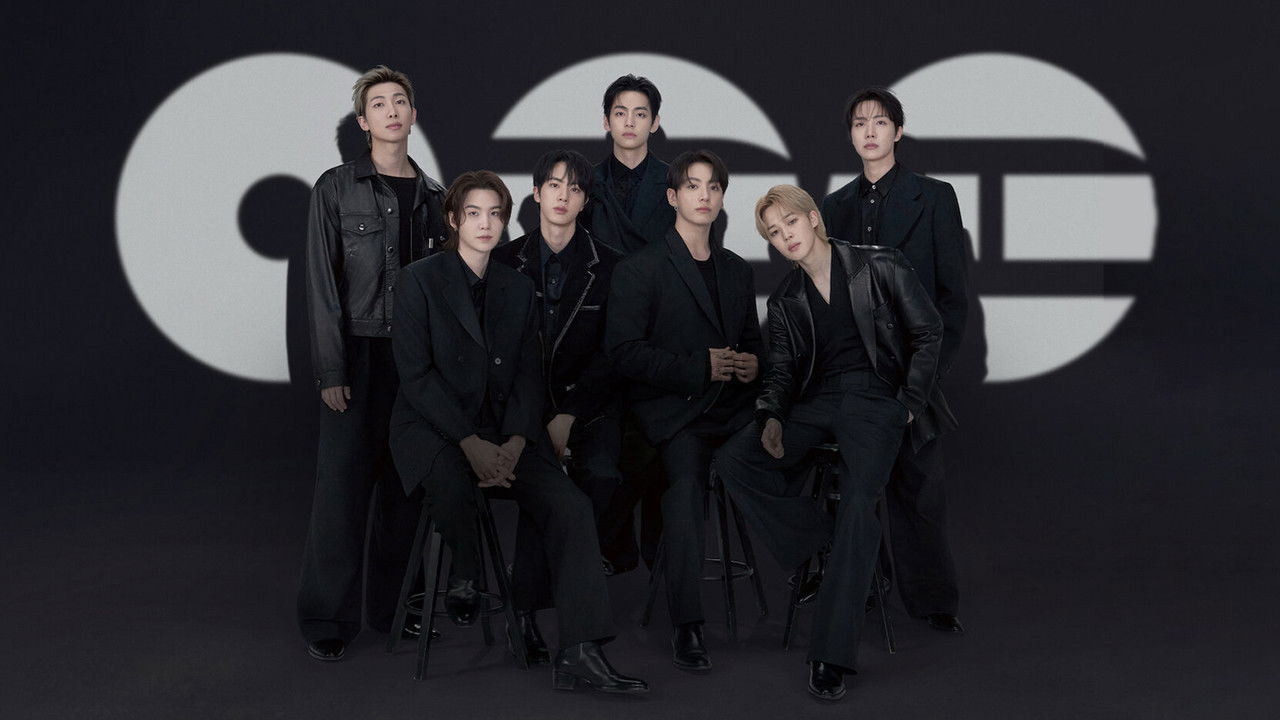
This is not the same as a band going quiet by choice. The K-pop industry has no playbook for mandatory group-wide military service, because no group at BTS's scale had undergone it before. HYBE, the label, had no equivalent case study. The members had no choice. The fans had no timeline. Every discharge date was announced by the Ministry of National Defense, not a PR team.
What that created — structurally, economically — was the conditions for a reunion unlike anything the music industry had modelled.
The album title is not incidental. Arirang is one of the oldest folk songs in Korean history — sung for centuries across separation, exile, and longing for return. There are hundreds of regional variants. UNESCO recognized it as an Intangible Cultural Heritage of Humanity. The lyrical core, across every version, is the same: someone leaving, someone waiting, a road that leads apart before it leads back. BTS named their comeback album after the song Koreans have always sung when they are separated from the people they love. For a group that spent three years apart — from each other, and from their fans — the choice is not subtle. It is exact.
The Pause Premium
The music industry understands reunion economics abstractly. A band breaks up, the nostalgia accumulates, the reunion tour sells out in minutes. What it does not fully understand — because the data is so rare — is what happens when the separation is involuntary, publicly documented in real time, and has a known endpoint.
ARMY, BTS's fanbase, did not scatter. They organized. Discharge dates were tracked in real time across fan accounts. Streaming parties maintained chart positions for back-catalogue tracks throughout the hiatus. Hashtag campaigns trended globally on every enlistment and discharge milestone. The fandom did not wait passively — it ran a three-year maintenance operation on BTS's cultural presence, with no instruction from the label and no guarantee of a return timeline.
Luminate's post-ARIRANG data shows the results: across every engagement metric — casual listeners, engaged listeners, strong affinity listeners, superfans — the figures are higher than BTS's pre-hiatus baselines from 2022. The hiatus did not erode the fanbase. The military coverage itself, three years of discharge countdowns and in-service glimpses, introduced BTS to audiences who were not prior fans.
The streaming data makes the point precisely. ARIRANG logged approximately 110 million Spotify streams on its first day — the largest opening-day figure for any K-pop album and the largest for any album released in 2026. It reached 1 billion streams in 16 days. For comparison, Taylor Swift's The Tortured Poets Department — released in April 2024 at the peak of the Eras era — reached 4 billion Spotify streams in 147 days. ARIRANG reached the same milestone in 137 days, despite BTS having been entirely absent from the industry for the preceding three years.
The gap made the demand larger, not smaller. Scarcity, when the audience trusts the product will return, functions as accumulation.
4 Billion Streams and What It Measures
The 4 billion Spotify figure is a useful anchor because it is verifiable and specific. It is also worth examining what it actually measures.
Spotify streams count a song if a listener plays more than 30 seconds. The 4 billion figure across ARIRANG's 14 tracks means the album's songs have been meaningfully engaged with — not just added to playlists and skipped — approximately 4 billion times. At an average track length of around three and a half minutes, that represents somewhere in the range of 200 million hours of listening.
| Album | Artist | Year | Day-1 Spotify Streams | Days to 4B | Billboard 200 Open |
|---|---|---|---|---|---|
| ARIRANG | BTS | 2026 | 110M | 137 days | 641,000 |
| The Life of a Showgirl | Taylor Swift | 2025 | 249.9M | 147 days | 4,002,000 |
| The Tortured Poets Department | Taylor Swift | 2024 | 313M | 147 days | 2,610,000 |
The table requires some care to read correctly. Swift's day-1 Spotify figures — 249.9 million and 313 million — are categorically larger than ARIRANG's 110 million. Her Billboard opening weeks are larger too. The speed-to-4-billion comparison is the one BTS wins, and it wins it by ten days over Swift's fastest mark.
The two data points describe different phenomena: Swift's numbers reflect the ceiling of maintained cultural omnipresence, releasing into an audience that has been continuously fed new material. BTS's numbers reflect what happens when that omnipresence is interrupted for three years and then restored. ARIRANG reached 4 billion faster than any Swift album despite being released into a three-year content vacuum. That is the actual story.
The Grammy Question
On July 29, 2026, BTS announced they would not submit ARIRANG for 2027 Grammy consideration.
The Recording Academy introduced an "Asian Pop Performance" Grammy category in June 2026, positioning it as recognition of the genre's global growth. BTS's response was to decline entirely. In a statement posted to their official channels, the group said they hope music can be heard and loved for what it is, rather than being divided by region or language.
The substance of the objection is straightforward: a separate category for music categorized by the ethnicity or cultural origin of its performers is not the same as recognition. It is a different kind of segregation. The existing Grammy infrastructure does not have a "European Pop Performance" category for Adele or a "Nordic Pop" category for ABBA. The music the Recording Academy considers mainstream has no language or geography gate. Only music from outside that perceived mainstream gets its own designated box. The "Asian Pop Performance" designation performs inclusion while maintaining the underlying logic of exclusion.
BTS has received five Grammy nominations historically and has not won. The new category would almost certainly have produced a nomination — and would have been the first. They declined it anyway.
The Grammy withdrawal will generate more coverage than a win would have. That is the correct outcome of the correct decision.
The Tour and What the Numbers Don't Capture
The BTS World Tour 'ARIRANG' opened April 9, 2026 at Goyang Stadium in South Korea. As of August 2026, it is mid-way through its North American leg. The confirmed schedule runs through March 14, 2027 — 84 shows across 23 countries.
Concert touring is where the streaming numbers translate into something the data can only gesture at. Streaming measures passive and active engagement in the same figure. A fan who listens to "Swim" on repeat and a first-time listener who stumbles onto it via algorithm both contribute equally to the 4 billion. The tour separates them. The 84 shows, across six continents, over twelve months, are attended exclusively by people who chose to be there.
The scale of the ARIRANG world tour makes it one of the largest tours of the decade. The three-year hiatus produced 4 billion streams and a sold-out globe. For an industry that regularly debates whether K-pop's global moment is sustainable or a temporary anomaly — the answer, at least in this case, is that it survived a mandatory three-year interruption and came out larger on the other side.
That is not a temporary anomaly. That is infrastructure.
Frequently Asked Questions
Why did BTS go on hiatus? South Korean law requires male citizens to complete mandatory military service, typically for approximately 18 months. BTS's seven members enlisted in staggered waves between December 2022 and December 2023. The last member, Suga, was discharged on June 21, 2025. The hiatus was not voluntary — it was a legal requirement.
What is ARIRANG? ARIRANG is BTS's fifth studio album, released March 20, 2026, on Big Hit Music (HYBE). It contains 14 tracks and was produced in collaboration with Diplo, Kevin Parker (Tame Impala), JPEGMAFIA, Flume, and others. The title references the traditional Korean folk song Arirang, a symbol of longing, resilience, and reunion.
How many Spotify streams does ARIRANG have? ARIRANG reached 4 billion Spotify streams in 137 days after release — the fastest by any group in Spotify history and the fastest by any Asian act ever. Across all platforms (Spotify, Apple Music, YouTube Music), combined streams exceeded 5 billion as of early August 2026.
Why did BTS withdraw from the Grammys? On July 29, 2026, BTS announced they would not submit ARIRANG for 2027 Grammy consideration. The Recording Academy introduced a new "Asian Pop Performance" category in June 2026; BTS objected to the category as segregating music by cultural origin rather than genuinely integrating it into mainstream categories.
How many shows is the ARIRANG world tour? The BTS World Tour 'ARIRANG' consists of 84 confirmed shows across 23+ countries, running from April 9, 2026 through March 14, 2027. As of August 2026, the tour is in its North American leg. The tour opened at Goyang Stadium in South Korea and covers North America, Latin America, Asia, Oceania, and Europe.
Did ARIRANG win any awards? At the 2026 American Music Awards, BTS won Artist of the Year, Song of the Summer ("Swim"), and Best Male K-Pop Artist. The 2026 MAMA Awards, where BTS leads predictions in several major categories including Album of the Year, are scheduled for November 2026.