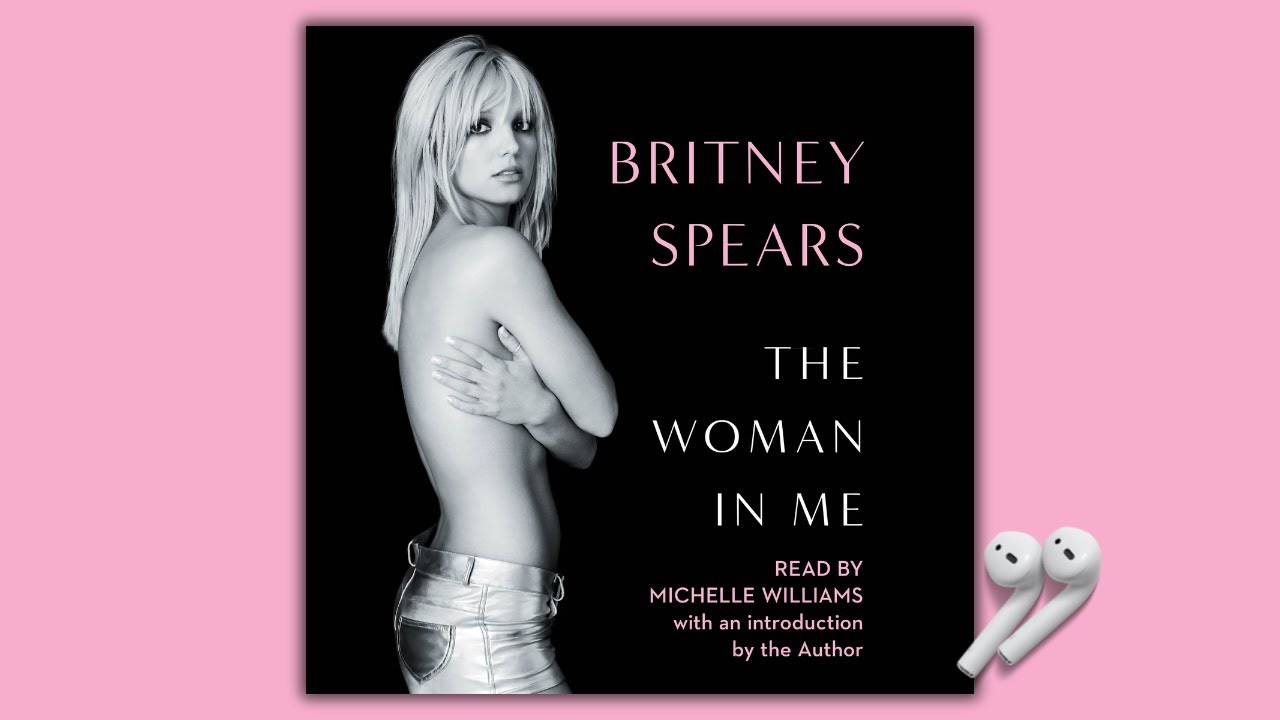
When The Woman in Me (2023) came out, I assumed I already knew what it was going to be: a celebrity memoir timed to the end of the conservatorship, some scores settled, some therapy-speak, a few bombshells seeded to generate press. I picked it up mostly to have an opinion on it. I did not expect to finish it in two sittings, and I did not expect it to bother me the way it did.
The conversation around it immediately collapsed into one chapter: the one where Britney reveals she got pregnant by Justin Timberlake at nineteen, and he pushed for an abortion. That chapter is a small fraction of the book. The conservatorship, the family history, the media coverage — all of it takes up far more space. But the ratio of public attention to the Timberlake chapter versus everything else is one of the most revealing things about how we have always talked about Britney Spears, and it is the thing the book itself is most urgently trying to tell us.
The Woman in Me is not a celebrity gossip memoir. It is a book about what happens when every institution in a woman's life, her family, the legal system, the entertainment industry, and the media, decides simultaneously that she cannot be trusted to run her own. And the fact that most people finished it and walked away talking about Justin Timberlake is not incidental. It is the pattern repeating itself in real time.
Control was the inheritance
The section of the book I found hardest to shake is not about the conservatorship at all. It is about Britney's grandmother, Lillian, who was committed to a psychiatric facility by her husband in the 1960s, an institution that had a documented history of sexual abuse. She was forced onto lithium. She never really recovered.
I had to put the book down after that. Not because it was melodramatic, but because it was so plainly stated. Britney is not making an argument when she writes about Lillian; she is just telling you what happened. But the implication sits there without needing to be spelled out: Britney's mother grew up watching that. Her father grew up in a household shaped by that history, then became an alcoholic who "disappeared for days" and, by Britney's account, frightened everyone in the family. The women in this family have been controlled, institutionalized, and chemically managed by men who claimed to be doing it for their own good, across multiple generations. When Britney's father became her legal conservator in 2008, he was not introducing a new dynamic. He was continuing one.
Britney's voice is direct and raw in a way that resists the polish of a traditional memoir, and I think that actually works in the book's favor. She is not constructing a thesis; she is telling you what her life felt like. But the throughline is there if you are paying attention. Control was not something that happened to Britney in 2008. It was something she grew up inside.
Pre-packaged medication, parental controls on her iPhone, and six million dollars a year
I want to be specific about what the conservatorship looked like day to day, because I think the public version of those years was so thoroughly shaped by the people running it that it is easy to misremember.
Security guards handed Britney pre-packaged envelopes of medication and watched her take them. Her iPhone had parental controls installed. Her father was not legally permitted to drink under the terms of the arrangement, but he did. Over the course of the thirteen-year arrangement, he collected more than six million dollars from her estate, while simultaneously arguing she was too mentally unwell to drink coffee or drive a car. She was told when to sleep. She was told when to perform. She did Las Vegas residencies that her father signed her up for while she was being described in court filings as mentally incapacitated.
"I became a robot," she writes. "But not just a robot, a sort of child-robot. I had been so infantilized that I was losing pieces of what made me feel like myself."
Reading that list of specifics, I found it difficult to hold the version of those years I had carried before, which was something like: Britney had a breakdown, her family stepped in, things got complicated. That is not what the book describes. The 5150 psychiatric holds in 2008 were the legal mechanism that made the conservatorship possible, but they did not create the conditions of her life. They formalized a dynamic that had existed long before. By the time a Los Angeles court granted her father temporary conservatorship while she was still in psychiatric care, the infrastructure of control was already in place. The court just gave it a name.
A twenty-one-year-old asked to explain a man's suffering
The 2003 Diane Sawyer interview comes up in the book as a "breaking point," and reading Britney's account of it, I went back and watched the clip again. Sawyer asked a twenty-one-year-old to explain why she had caused Justin Timberlake "so much suffering." She described Britney's abs as "the most valuable square inch of real estate in the entertainment universe." She told Britney that she had "upset a lot of mothers." At one point, Sawyer pushed Britney to tears on camera and then kept going.
Britney writes that she was not told the questions in advance, that she had been pushed into doing the interview by her father and management, and that she felt "exploited." Watching it now, that framing seems obviously correct to me. But what I kept thinking about was how unremarkable it felt at the time. I was young when that interview aired, and I remember the cultural consensus was something like: Britney owes the public an explanation. That Sawyer was simply doing her job.
The clip resurfaced when the Framing Britney Spears documentary came out in 2021, and there was genuine backlash. People said it had not aged well. There were apologies. But what I noticed then, and what the memoir reinforces for me now, is that "it hasn't aged well" lets everyone off the hook a little too easily. The interview was not an outlier; it was what an interview with Britney Spears looked like. She was asked, constantly and by everyone, to account for the men around her and to explain why her body was causing problems for other people. The audience for those interviews was enormous, and it watched without protest, because the framing matched what it already believed about her.
The years we called it Britney going crazy
I was a teenager during roughly 2006 to 2008, the years when the public narrative about Britney was essentially unified: she was unstable, reckless, unfit. I absorbed that consensus without questioning it. The umbrella-to-car-window image. The head shaving. The paparazzi footage. I remember thinking, the way many people thought, that she had simply lost it. That she had brought it on herself somehow. That it was sad, but also kind of fascinating.
Reading The Woman in Me required me to sit with how wrong that was. Not wrong in the sense that she was not struggling, because she was, and she says so. Wrong in the sense that "Britney going crazy" was the entire frame, and inside that frame there was no room to ask who was controlling her medication, who was profiting from her performances, or why a woman in visible crisis had paparazzi camped outside her house around the clock.
The book does not ask for sympathy, and I respect that. It asks for something harder: comprehension. It wants you to understand not just what happened, but how it was allowed to happen, and what your role in allowing it was. I found that uncomfortable to sit with. I think that discomfort is exactly the point.
Eight pages out of two hundred and eighty-eight
The chapter itself is more painful than the way it circulated online suggested. Britney writes that she and Timberlake were both nineteen when she got pregnant in 2000. She had thought they were going to get married. She writes that abortion was something she "never could have imagined choosing" for herself, that if the decision had been hers alone she would not have made it, but that she went through with it for him. The procedure was done at home. He broke up with her by text message not long after.
What makes the chapter hard to reduce to a tabloid beat is not just the content but the way Britney writes about it: with grief still in it, and without resolution. She is not performing closure. She is not framing the abortion as empowerment or the relationship as a learning experience. She is describing a nineteen-year-old who loved someone and made a decision she did not want to make, and the aftermath of that, and then he left her anyway. That is a different kind of story than "famous woman accuses famous man," which is largely how the public processed it.
Justin Timberlake's response, a public apology posted on Instagram that many found insufficient, briefly dominated the news cycle in a way that the conservatorship chapters never did. His subsequent album released in 2024 was met with widespread skepticism partly because of the timing. The discourse around Britney and Justin has its own ongoing life.
But the reason the JT chapter absorbed so much oxygen is not just that it was dramatic. It is that it was legible in a familiar frame: two famous people, a relationship that ended badly, competing accounts. That is a story structure people know how to consume. The story of a legal system that stripped a woman of her civil rights for thirteen years with the court's full approval is harder to hold. It implicates more people. It requires more from the reader.
The Woman in Me keeps pointing at the harder story, and I think it knows exactly what it is doing when the JT chapter lands where it does: near the beginning, before the conservatorship, when the reader is still orienting. It is not buried; it is early enough that you cannot miss it. But then the book moves past it into the parts that are actually more damning, and what is interesting is how much effort the public put into not following it there.
I understood the pull. The JT story is legible in a familiar way: two famous people, a relationship, competing accounts, someone who owes an apology. That is a story structure we know how to consume. The story of a legal system that stripped a woman of her civil rights for thirteen years, with the court's full approval and the public's passive acceptance, is harder to hold. It implicates more people. It requires more from you as a reader.
The Timberlake chapter is one section of a book whose weight sits overwhelmingly on the conservatorship, the family history, and the media apparatus. The distribution of public attention inverted that almost completely, and I do not think that is an accident. It is the same reflex that put Diane Sawyer in that room asking a twenty-one-year-old to account for her ex-boyfriend's feelings. We have always been more comfortable with Britney as a supporting character in someone else's story than as the subject of her own.
The Woman in Me is an attempt to correct that. Whether you let it is up to you.
The Woman in Me by Britney Spears is available wherever books are sold.